

More Ways than One: Designing for Your Needs
In our last few newsletters, we’ve explored a simple but increasingly important idea: more families are beginning to ask whether living together—in well-designed, multi-dwelling homes—might make more sense than trying to do everything alone.
When people first hear this idea, a natural question generally follows: What does that actually look like?
For many, the assumption is that shared living means giving something up—privacy, independence, or flexibility. In reality, the opposite is often true.
Across Southern Ontario, there are a growing number of ways to design homes that allow families to live together while still living well—with thoughtful separation, dignity, and adaptability built in from the beginning.
Importantly, these options aren’t one-size-fits-all. They can be shaped around your family, your property, your budget, and your long-term hopes.
A Range of Possibilities (Closer Than You Think)
While zoning and bylaws vary by municipality, Ontario has been steadily opening the door to more flexible housing forms—especially those that gently increase density while maintaining neighbourhood character.
Within that landscape, several design approaches have emerged as both practical and widely achievable.
1. Detached Backyard Homes (Accessory Dwelling Units)
Sometimes called garden suites, these are small, fully independent homes located in the backyard of an existing property.
They offer:
Complete separation and privacy
Flexibility for rental, family use, or future downsizing
A clear sense of “two homes,” on one piece of land
For families who want proximity without overlap, this can be a particularly natural fit.
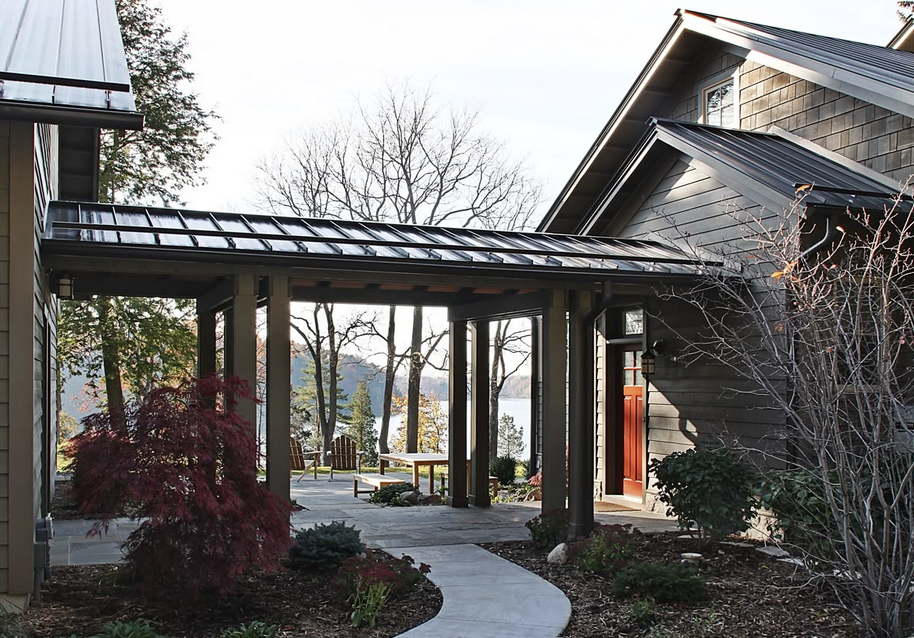
2. Connected by a Breezeway
In some cases, zoning restrictions make fully detached units more difficult.
A breezeway—a simple architectural connection between two structures—can offer a creative solution.
This approach:
Maintains a strong sense of separation
Creates visual and architectural unity
Sometimes allows approvals where detached units may not be permitted
It’s a small design move that can open significant possibilities.
3. Above-Garage Apartments
An above-garage unit is one of the most efficient ways to add a second dwelling without expanding a home’s footprint too dramatically.
It can:
Make use of space that might otherwise be under-utilized
Provide strong privacy with a separate entrance
Fit well within many existing neighbourhood forms
For many properties, this is one of the most accessible entry points into shared living.
4. Thoughtful Additions (A New Wing of the Home)
Sometimes the simplest approach is to build onto what already exists.
A well-designed addition can create:
A fully independent living space
Proximity that supports daily connection
Accessibility for aging in place
Done thoughtfully, these additions feel less like “extras” and more like a natural evolution of the home.
Designed for Now—and for What Comes Next
One of the most important, and often overlooked, aspects of these designs is this:
They don’t just solve today’s needs. They leave room for tomorrow. A space that begins as a home for adult children may one day become:
A place for aging parents
A rental unit for supplemental income
A workspace or studio
A home for a caregiver or another family member
This kind of flexibility matters, because life rarely stays still. And homes that can adapt alongside us tend to serve us far better over time.
A Different Way to Think About Home
For a long time, we’ve been handed a fairly narrow definition of what a home should be: one household, one structure, one path forward.
But more and more, families are discovering that this definition doesn’t always fit real life. Not because something has gone wrong—but because our needs are more interconnected than we’ve been taught to expect.
The encouraging news is this: We have more options than we often realize.
And with a bit of creativity, good design, and an understanding of what’s possible within Ontario’s evolving zoning landscape, those options can become both practical and deeply life-giving.
A Gentle Next Step
If this way of thinking resonates, you don’t need to have everything figured out.
A simple starting point is often enough:
A conversation with your family
A look at your property’s potential
An exploration of what might be possible—before deciding what should be done
At AERAS, this is the work we care about most: helping families imagine and shape homes that reflect not just where they are, but where they’re going.
Because when homes are designed with intention, they have a quiet way of supporting the kind of life we actually want to live.
– Timo, Nathan, and the AERAS Team
AERAS Dwellings — Building homes for wholeness, one village at a time
