

The Conversation That Changes Everything…
Many of the most important changes in life begin with a simple conversation.
Not long ago, we were speaking with someone who said, "I've actually been wondering about this for years, but I wasn't sure how to bring it up."
The "this" could have been any number of things: An aging parent who might benefit from living closer to family. Adult children struggling to enter the housing market. A grandparent spending too much time alone. A property that seems like it could hold more possibility than it currently does.
The details vary from family to family, but the story is often the same. Someone is quietly wondering whether there might be a better way to live together. And nobody knows quite how to start the conversation.
Why These Conversations Feel Difficult
Part of the challenge is that many of us inherited a very specific picture of adulthood: Parents raise children, children move out. Everyone establishes their own household. And success is measured, at least in part, by independence.
For decades, that model worked well enough that we rarely questioned it. But today's realities are prompting many families to ask new questions. Housing costs have changed. As have retirement and childcare. Even the prevalence of loneliness and isolation have changed.
So, increasingly, families are discovering that the old assumptions don't always fit the realities they're facing. The challenge is that questioning those assumptions can feel uncomfortable. Will we lose privacy? Will living closer create tension? Will people think we're moving backward?
These are fair questions, but they are questions worth discussing—not reasons to avoid the conversation altogether.
Starting with Curiosity
The most fruitful conversations rarely begin with a proposal. They begin with curiosity. "What do you imagine the next ten years looking like? Have you ever thought about living closer together? What would make life easier right now? If we could design a living situation from scratch, what would it look like?" Questions like these create space for possibilities to emerge without pressure, since the goal isn't to convince anyone, but simply to explore.
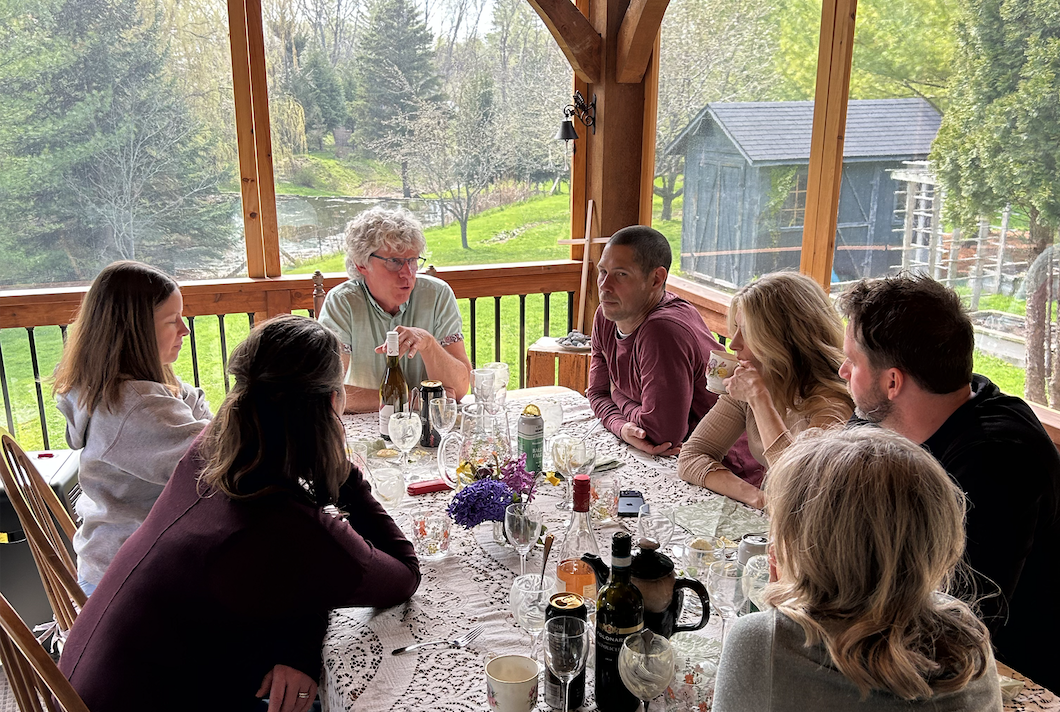
We’ve had those conversations with our families recently as well. My (Nathan’s) parents recently invited all of us adult children and our spouses over for a meal, with the explicit purpose of discussing the future of the family homestead, and for everyone laying out our hopes and dreams for the future (with the agreement to share openly from our own specific situations, and to move towards equitable possibilities).
Timo’s family has had similar conversations that have already led to tangible share living arrangements with parents, allowing for unique and creative living arrangements, and new financial possibilities.
You may discover that your parents have been quietly wondering about the same thing. Or that your adult children have considered it but didn't want to seem dependent. Or that everyone around the table has been carrying similar concerns without realizing it.
Looking Beyond Today's Needs
One of the most helpful shifts is to think beyond the present moment. Many families begin by solving a current challenge: Housing affordability. Childcare. Retirement planning. But the most successful shared living arrangements often look further ahead. What happens when children arrive? What happens when parents need more support? What happens when work circumstances change? What happens twenty years from now?
In our case, we didn’t come to a conclusion over our dinner conversation. But we agreed that now that we’ve shared our general ideas and current thinking, we’d reconvene and talk about it again. We’re realizing that a well-designed property isn't just a solution for today's needs, it's a framework that can adapt as life unfolds. That can take some time, and some potentially awkward conversations, but it’s the way to get to push past our limiting assumptions and into our healthiest life stages together.
– Timo, Nathan, and the AERAS Team
AERAS Dwellings — Building homes for wholeness, one village at a time
