

From “What If?” to “What’s Possible?”
So, you've started the conversation.
Maybe you've talked with your parents about the family homestead, wondered whether buying a home with your adult children could make sense, or admitted that your current arrangement isn't working as well as you'd hoped. That's a meaningful first step. But how do you move from imagining something different to figuring out whether it's actually possible?
For many families, this is where things get stuck. The idea sounds appealing, but the practical questions feel overwhelming. Where would everyone live? Could we afford it? What could we do with the property we already own? And are other families actually doing this?
The good news is that you don't need to answer everything at once. You just need to know what to explore next.
1. Start With the Life You Want to Build
Before looking at properties or calculating mortgages, imagine what a good arrangement would look like.
How much privacy does each household need? Would you want separate kitchens and entrances? What responsibilities would you enjoy sharing—and which would you prefer to keep separate? Think about the next five, ten, or twenty years, too. Children become teenagers. Parents grow older. Careers change. People need more space, or sometimes less.
You don't need a perfect vision. But knowing what matters most will help you recognize which possibilities are worth pursuing.
2. Put Some Real Numbers on the Table
One of the biggest barriers to shared living is the assumption that it probably won't work financially. But have you actually run the numbers?
Consider what each household spends—or expects to spend—on housing, including mortgages, taxes, utilities, maintenance, insurance, and potential retirement or rental costs. Then explore what pooling resources might make possible. Could two households buy a more suitable property together? Could an existing home accommodate a second dwelling? Could construction costs be offset by avoiding a separate home purchase or generating rental income?
Financing, construction costs, ownership arrangements, and ongoing expenses all matter. Shared living isn't automatically cheaper. But sometimes the numbers reveal possibilities that neither household could achieve alone.
Don't assume it won't work before you've given it a proper look.
3. Find Out What Your Property Could Actually Do
You don't necessarily need to buy a new property to make this happen.
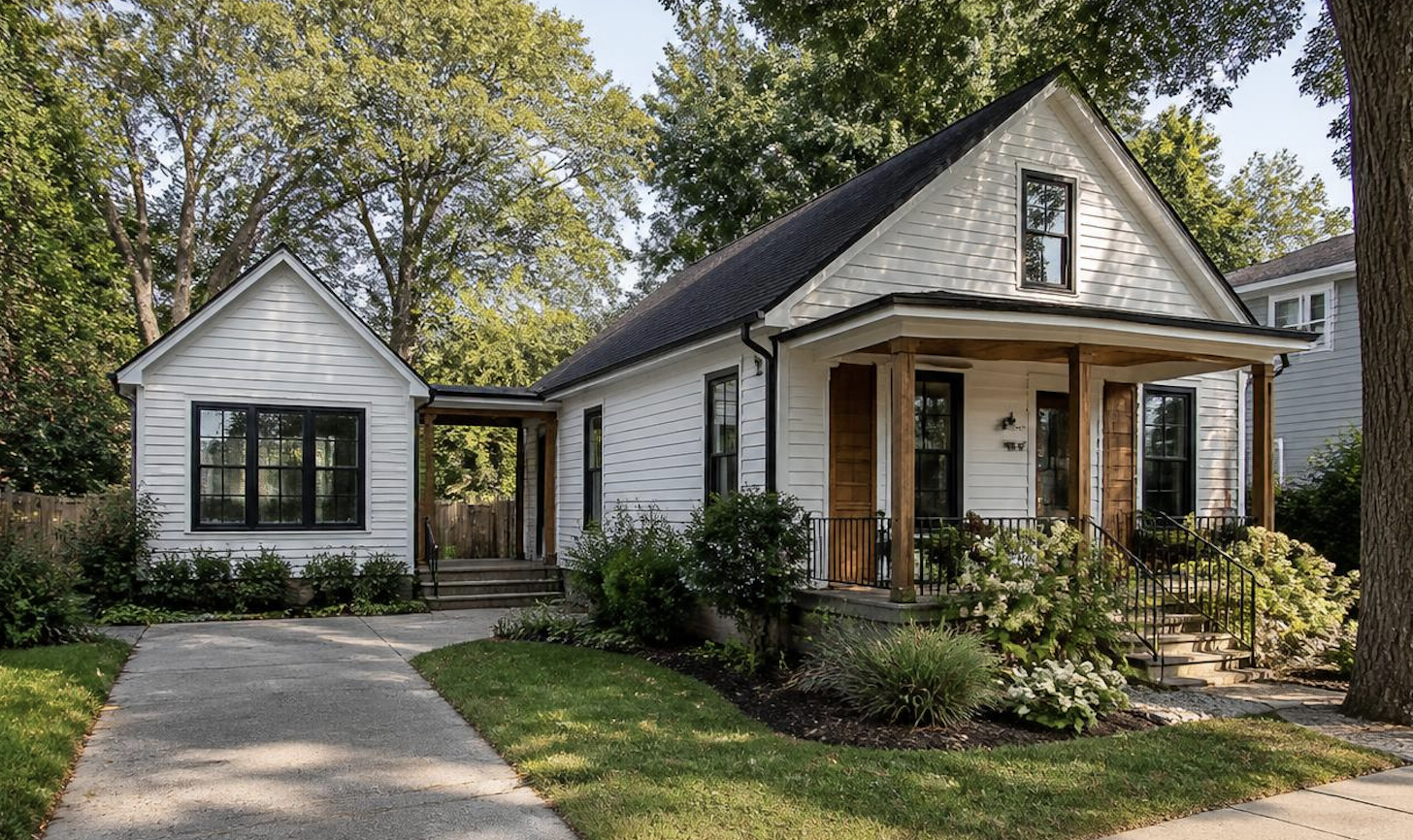
An existing home might accommodate an interior conversion, an attached suite, an addition, or a detached backyard dwelling. A property you hadn't considered particularly special might offer a surprisingly good solution. Local zoning, lot dimensions, servicing, building-code requirements, and construction costs will influence what's feasible. A conversation with someone experienced in multi-dwelling design can help turn a general idea into a clearer picture of your options.
Sometimes the answer is a new property. Sometimes it's the one you already have.
4. Remember: You're Not the First Family to Consider This
It's easy to assume that if shared living were such a good idea, everyone would already be doing it.
But for generations, separate households have often been treated as the default measure of independence and success. Now, as housing costs rise and families reconsider how they share resources and care for one another, more people are exploring alternatives. Multi-generational living isn't new. What's changing is our willingness to consider it again—and the range of ways we can design homes to make it work.
You don't have to follow a well-worn path. You just need enough information to understand the path in front of you.
5. Give Yourselves a Next Step, Not an Ultimatum
After the initial conversation, agree on one small next step.
Gather financial information. Research a property's zoning. Visit a home with a separate secondary dwelling. Talk with a designer. Or schedule another family dinner to compare what you've learned. Exploring the possibility doesn't commit anyone to living together. The goal is to make a decision everyone can enter freely, with a clear understanding of the benefits, trade-offs, and expectations.
Sometimes the decision will be to move forward. Sometimes it will be to wait or pursue a different arrangement. Either way, you'll be making a more informed choice than if you'd left the possibility unexplored.
A More Generative Way Forward
You don't need to have everything figured out. You need a willingness to ask different questions, explore the real possibilities, and take the next step together. And, if you need help, we're good at that, and we would love to help you move towards clarity!
You've started the conversation. Now it's time to discover what that conversation might make possible.
– Timo, Nathan, and the AERAS Team
AERAS Dwellings — Building homes for wholeness, one village at a time
